
OEM and aftermarket starter motors serve the same purpose. But understanding the differences is crucial when making a decision. Especially for B2B buyers, it’s not just about lower prices; it’s about balancing quality and cost.
Buyers must consider their ultimate goal. Determine the right purpose, whether they need OEM or aftermarket parts. We will explain the differences between OEM and aftermarket starter motors and help you understand which is the better choice.
What are OEM Starter Motors?
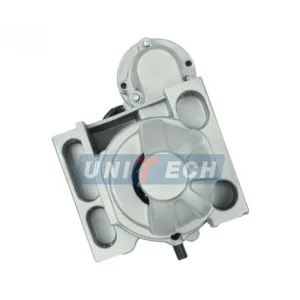
OEM refers to the original equipment manufacturer. OEM starter motors are manufactured by the original equipment manufacturer or approved suppliers. They closely match the original equipment.
Most often, OEM parts are expensive because they are original. However, they have several key features:
- Original specifications: Designed to match the vehicle’s factory requirements.
- Reliable compatibility: Usually offer a direct fit for the intended vehicle.
- Brand recognition: Often preferred by customers who want original replacement parts.
- Higher pricing: Usually cost more than many aftermarket alternatives
What are Aftermarket Starter Motors?
Aftermarket starter motors are like the original components but manufactured by companies other than the original manufacturer. They have similar features and serve as an alternative. Sometimes, they are an upgrade over the original part.
Compared to OEM, they may be more affordable. Aftermarket components often have the following features:
- Competitive pricing: Often more affordable than genuine OEM products.
- Wide product selection: Available for different vehicle brands, models, and engine types.
- Flexible sourcing: Distributors can purchase from multiple manufacturers and suppliers.
- Different quality levels: Product quality depends on the manufacturer and production standards.
OEM vs. Aftermarket Starter Motor: Key Differences
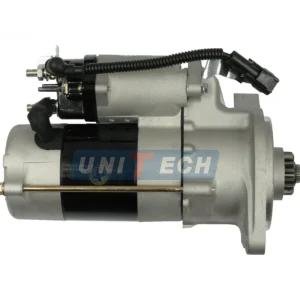
OEM and aftermarket parts may differ in various ways. Common ones include:
| Comparison Factor | OEM Starter Motor | Aftermarket Starter Motor |
| Manufacturing | Original manufacturer or approved supplier | Independent manufacturers |
| Specifications | Follows original vehicle specifications | May follow or improve OEM specifications |
| Compatibility | Designed for specific vehicle applications | Depends on manufacturer and application data |
| Quality | Follows original production requirements | Varies by brand and quality level |
| Pricing | Generally higher | Often more competitive |
| Warranty | Depends on OEM policy | Depends on supplier and manufacturer |
| Availability | Depends on dealer and distribution networks | Multiple sourcing options |
| Customization | Usually limited | More options from some manufacturers |
| Product Range | Based on original vehicle applications | Can cover multiple vehicle applications |
Manufacturing
The manufacturing process and manufacturers are different. OEM involves the original manufacturer. For example, the original manufacturer designs the starter motor.
By contrast, aftermarket starter motors come from third-party manufacturers. They are not the original designer or producer. The productThe product may also depend on the manufacturer.
Specifications
Specifications and features can vary. Compare your original starter motor with the OEM parts. Usually, OEM motors have the same features as the original. This is because of the original manufacturer’s design.
On the other hand, aftermarket parts offer a close match to the features. They may or may not have the same specifications. You have to check the features.
Compatibility
Compatibility depends on the components. OEM starter motors are often compatible with the original equipment. They offer the same performance as the original one.
In contrast, aftermarket starter motors may be a close match. They can be compatible, but sometimes they may not be. You have to check and verify their compatibility when choosing them manually.
Quality
The quality of starter motors can vary. Usually, OEM motors are of high quality. They are the same quality and deliver the same performance as before.
Since aftermarket parts are replacements, they don’t guarantee the same performance. They may be of the same quality but may not deliver the original performance.
Pricing
If you are comparing prices, it is essential to know which option is more affordable. OEM starter motors are often expensive. Their higher costs are due to their original manufacturing. Higher costs can also be due to higher demand and limited supply.
Compared to OEM, aftermarket suppliers can offer starter motors at lower prices. Therefore, supply is greater than demand, causing lower costs. Moreover, the suppliers tend to offer reduced prices.
Warranty
Warranty can vary and depends on the manufacturers and suppliers. OEM starter motors may have a different warranty. Normally, they are original. Therefore, manufacturers often offer longer warranty periods than aftermarket parts.
But don’t underestimate the aftermarket starter motors. They may have a longer warranty than OEM. But it depends on the manufacturer and its warranty period.
Availability
Availability means access to the starter motors. OEM starter motors are often limited. This is because of the limited number of suppliers. Their production capacity is lower than that of aftermarket parts. This is why you have to order OEM starter motors as a special order.
In contrast, aftermarket starter motors are readily available. Hundreds of manufacturers offer the same product. Even the quality can be good.
Customization
Sometimes, you want to upgrade starter motors. Or add brand logos to the given motors. In that case, customization plays a vital role.
OEM starter motors are not customizable. Some manufacturers may offer customization only in a few cases.
On the other hand, aftermarket parts offer customization options. You can modify and improve them to suit your needs.
Product Range
Product compatibility and range matter. OEM starter motors are compatible with the original components and tools. They may not be compatible with other tools. Therefore, their application range is limited.
By contrast, aftermarket parts are more diverse. They are easy to modify and can be used across different tools. Depending on the manufacturer, you can design them to serve several tools.
Which One is a Better Choice?
After understanding the differences, you may wonder which one is the better choice. If so, each one has different purposes and benefits.
OEM starter motors are a better choice in:
- Customers who specifically request genuine parts.
- Premium vehicle repair markets.
- Dealerships and authorized repair centers.
- Applications requiring original manufacturer specifications.
- Buyers who prioritize brand assurance.
Aftermarket starter motors may be more suitable for:
- Independent repair workshops.
- Wholesale auto parts distributors.
- Price-sensitive customers.
- Older vehicle applications.
- Markets that require a wide range of replacement parts.
Conclusion
OEM starter motors come from the original manufacturers. They are often expensive but offer higher-quality performance. They are suitable if you need genuine products. Aftermarket starter motors are also original products but come from independent manufacturers. They offer better prices and are a good replacement for the given components.
If you are looking for high-quality auto parts, UNITECH Motors has quality starter motors. Our motors deliver efficiency and go through a comprehensive production process. You can expect better-quality, original motors and affordable auto parts. Contact our experts right away!