
Introduction
When a vehicle fails to start, we blame the starter motor. It may be a small electrical unit, but it plays an important role in the engine’s operation. When it does not run, the vehicle becomes unreliable or completely unusable.
This guide covers the most common starter motor problems. It also helps you determine whether the problem is with the starter motor or another part. It then gives you the difference between repairing and buying a starter motor.
Common Starter Motor Problems

Many starter motor failures show a few obvious signs before they deteriorate. Below you can find the most common starter motor problems to note that arise before it completely fails:
Clicking Sound
The clicking sound is the most obvious problem with the starter motor. When you turn the key or press the button, the engine does not start; instead, it makes a few clicks. This means that the starter motor is attempting to turn the engine, but does not have enough power to do so.
This may be due to worn internal parts, poor electrical connections, or a failing solenoid. Sometimes the battery is fine, but the starter motor cannot pass power to itself. Repeated clicking upon cranking is a warning that the starter motor is failing.
Smoking Car
Smoke coming out of the engine during startup is a serious sign. The starter motor draws too much current and overheats. Leaking oil from the motor can damage the insulation and worsen the problem by soaking the motor.
Electrical wires can become hot, leaving a burning smell or becoming visible through the smoke. If you have tried to start the car, the problem can be made worse. When smoke appears, it is a sign that the starter motor needs to be inspected or replaced.
Completely Unresponsive Starter Motor
Sometimes the car will not start up at all. You don’t hear any engine noise or see any movement, although the dashboard lights and the radio are working.
Often, the starter motor is starved of power due to a relay failure, broken wiring, or even a motor malfunction. A complete absence of noise can indicate a dead starter motor or a faulty ignition signal. This generally means that the motor has worn out.
Intermittent Starting Failure
Intermittent problems are most difficult with the starter motor. One day the car would be working fine, and the next time not. This is usually caused by people using worn starter motor brushes or by an unevenly working solenoid.
This can be harmful due to extreme temperatures. Drivers believe it is a battery issue, since the jump-starts may work for a while. After a time, these problems don’t start the motor.
Grinding Sound
If you hear a grinding noise, it is a sign that the starter motor gear is not engaging properly with the flywheel. This sound is rather high, metal-like, and should not be overlooked.
If left unaddressed, grinding can lead to the complete failure of these parts, resulting in costly repairs. Grinding is one of the sure signs that the starter motor’s internal mechanical parts are worn.
How to Differentiate Between a Starter Motor Problem and a Battery or Other Component Problem?
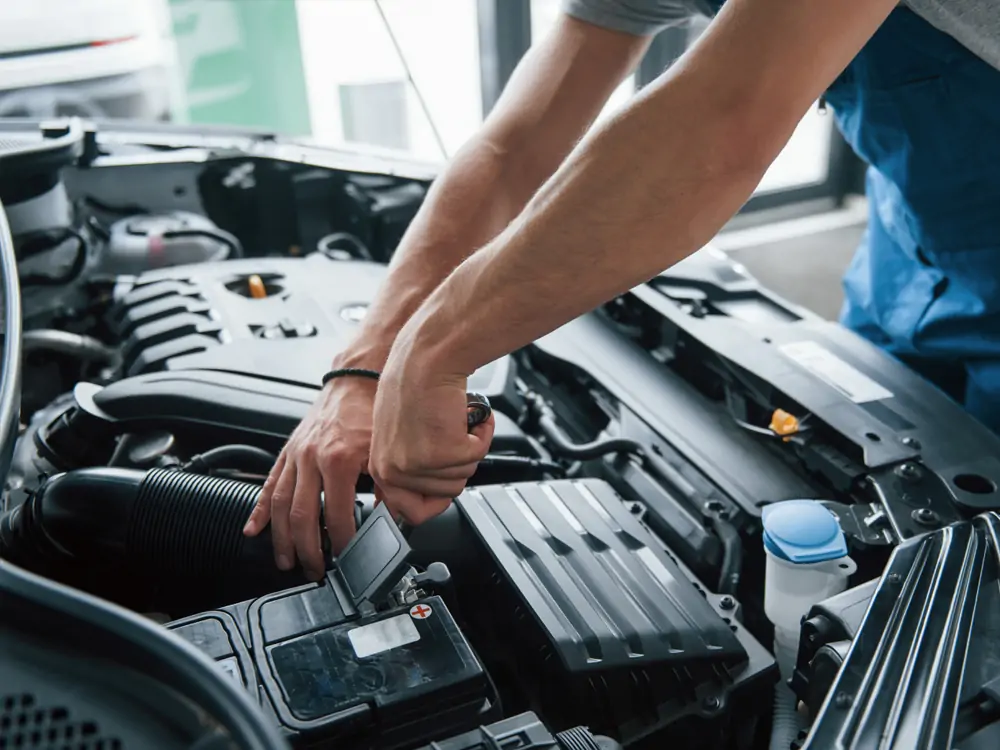
Not all no-turn-over can be starter motor problems. Problems in the battery, in cables, engine, relays, or in the ignition switch can all create confusion.
The first thing to check is the battery voltage. When this is good, it should read near 12.6 volts. Anything less than or anything more, and there is a problem.
If the battery is not very weak, a jump start may help for a short duration of time. If you have tried a jump-start and still can’t crank the motor, the starter motor is likely to blame. Clean the battery terminals and secure the connections, as corrosion increases resistance.
Listen closely enough because the clicking is usually not the battery but the starter motor. If the accessories are working but the engine will not crank, it is almost certainly the starter motor.
Time and money can be saved by performing simple electrical fault checks.
Repairing an Old Starter Motor vs. Buying a Brand New One? A Real Comparison of Cost and Lifespan
When any of the starting motors fail, you usually have 2 options: either replace the old motor or purchase a new one.
Repairing in this instance means replacing brushes, solenoids, or worn bearings. In most cases, it costs $30-$90 and can save money and extend the part’s life. Success will depend on the quality of the repair and the condition of the part. Repairing the armature or windings will take longer if they are damaged.
Professional repair is another option, but labor costs can be high. In cases where parts are hard to find, the repair cost is often comparable to the cost of a new motor.
If you want a long, smooth run, then buying a new starter is better. Depending on the car, prices are $80 to $350. New starters are made to standards and can last 100,000 to 150,000 miles and come with 1- to 3-year warranties. With professional installation, the total cost can range from $150 to $ 1,050.
| Feature | Repair Starter | Brand New Starter |
| Upfront cost | Lowest ($30-$90) | Highest ($80-$350+) |
| Typical lifespan | Varies widely | 100,000-150,000 miles |
| Reliability | Moderate | High |
| Warranty | None to 30 days | 1-3+ years |
| Best use case | Tight budget or minor damage | Long-term ownership |
This decision is based on your vehicle use and what is most reliable for you. Short trips, very hot or cold weather, and powerful engines may cause the starter motor to wear out more rapidly. Drivers with a small budget and minor problems might choose to repair the broken item. If you drive your vehicle every day or plan to keep it, it is usually better to get a new starter motor.
Conclusion
Starter motor problems are usually the first sign of problems. A few common starter motor symptoms include clicking, grinding, smoke, or strange starts. If you know how to look for these signs, then you know how to act quickly and safely. First, check the battery, connections, and terminals to determine any issues with the starter.
For wholesale starter motors, choose a reliable factory for quality supplies. We help buyers with starter motor details, testing, and custom requirements. For quotes, sample or bulk orders, contact us directly at https://unitechmotor.com/
FAQs
How does a starter motor work?
A starter motor drives a small gear on the engine’s flywheel using electricity from the battery. This action rotates the crankshaft, which starts the combustion process in the engine. Once the engine starts, the starter motor automatically disengages itself.
Why are more and more repair shops importing starter motors directly from China?
China has offered competitive pricing and consistent availability of starter motors, prompting shops to import them directly. It also provides good testing standards, performance and quality.
How can I contact you for starter motor quotes, samples, or bulk discounts?
Customers can contact us directly at UnitechMotor for starter motor quotes, samples, or bulk discounts.