
Introduction
A starter starts your car engine. When you turn the key, the starter rotates the engine. Your car engine begins to operate. You cannot start your car engine without a functional starter.
Car owners inquire about starter motor replacement due to unusual noises. They hear clicking sounds. They detect burning wires’ smells. Other drivers observe the engine’s slow rotation when starting during freezing mornings.
This article explains how long a starter motor replacement will take.
What Does the Starter Motor Do?
The starter rotates the engine during ignition. The battery operates the starter. The starter motor’s small gear engages with the engine’s flywheel. Then, the engine starts rotating.
Drivers activate the starter for only a few seconds each trip. Its repeated activation leads to wear over time. Heat, dirt, and oil leakage can affect the starter’s performance.
Today’s vehicles frequently switch off and turn back on when driving in traffic. Therefore, the starter bears more strain compared to those driven on highways.
How Long Does Starter Motor Replacement Take?
It takes about two to four hours for most shops to replace a starter motor. Small cars usually take ninety minutes. Bigger vehicles may require additional effort.
Starter motor replacement involves the following procedures:
- Battery and alternator test.
- Starter motor wiring and terminals inspection.
- Lift the vehicle safely.
- Removal of old starter components.
- Installation of a new starter motor.
- Test engine startup.
Signs You Need Starter Motor Replacement
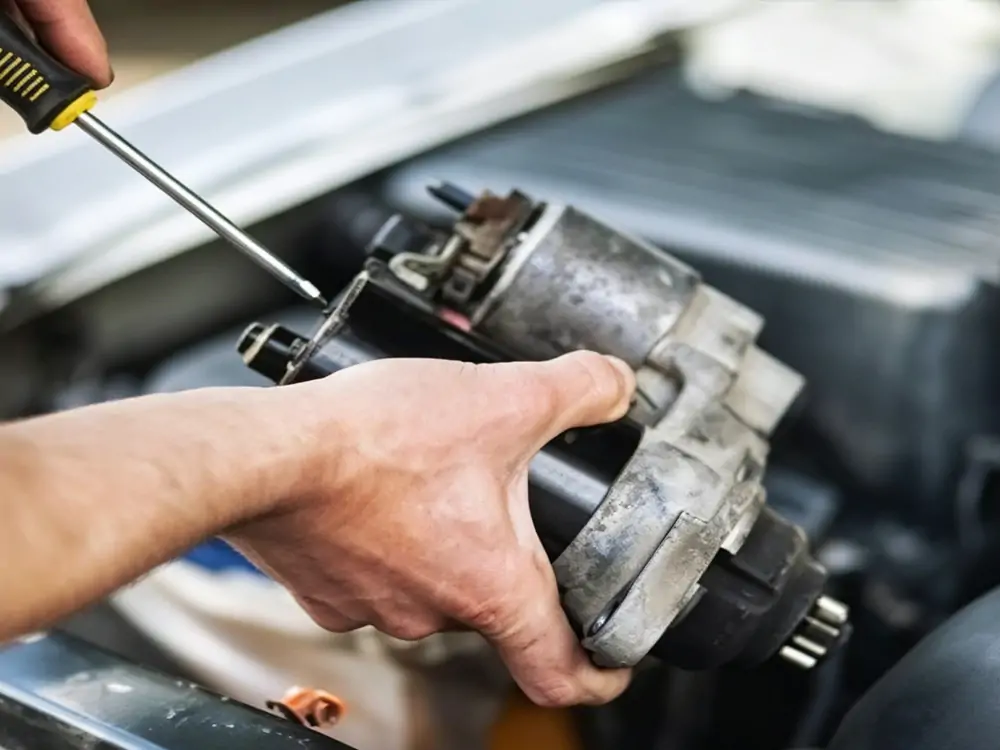
There are several indicators that warn you of a failure in your car. People can prevent roadside emergencies by acting quickly. The signs you may see for a starter motor replacement are:
● Clicking Sound During Startup
If you hear a clicking sound in your car, you should be worried about your starter. There is no movement in your engine when you try to turn the key. Usually, mechanics test the battery’s voltage before changing the starter.
● Slow Engine Cranking
When your starter has low energy, your engine starts slowly. Low temperatures usually worsen the problem.
● Grinding Noise
The gear on the starter motor grinds against the flywheel. You will need to replace your starter once you notice any grinding noises.
● Smoke or Burning Smell
When your starter is hot, you see lots of smoke and a strong burning smell. Do not drive if you notice this, as the wiring may be overheated.
● Random Starting Problems
Sometimes your car starts without a problem, but fails the next morning. Irregular issues cause the starter motor to be replaced within weeks.
What Causes Starter Motor Problems?
Component degradation remains the primary cause of starter motor malfunctions. All components deteriorate through extended use.
In addition, oil leakage impairs the starter motor’s functionality. This is because oil coats all electrical components and attracts debris. Contamination leads to overheating and poor conductivity.
Furthermore, loose wiring can cause starter motors to malfunction. The lack of a reliable electric current causes the starter to exert more effort during startup.
Malfunctioning batteries can also cause problems with the starter motor. A battery that cannot deliver sufficient electrical energy will cause the starter motor to overheat due to excessive strain.
Lastly, flooding can cause corrosion in the starter motor. Water destroys electrical contacts and metal surfaces.
Can You Repair a Starter Motor?
Some technicians will fix minor problems with the starter motor. However, most technicians will recommend the starter motor replacement instead.
Completing a starter motor replacement saves time and reduces the risk of future repairs. Old internal parts often fail again after small repairs.
Replacing the starter motor requires knowledge of how to handle heavy parts and wiring systems. Most car owners avoid repairing the starter motor at home because of the tight space inside the engine compartment.
Where Is the Starter Motor Located?
The starter motor is commonly located at the bottom of the engine, usually on the driver’s side.
Sometimes, the starter motor is mounted close to the exhaust. Wear will be accelerated by the heat from the other parts.
High-end cars tend to place the starter motor farther back in congested engine bays. Such arrangements will result in longer installation times for replacing starter motors.
How Long Does a Starter Motor Last?
On average, a starter motor lasts five to seven years. Some starter motors can last 100,000 to 150,000 kilometers.
Driving behavior will determine the starter motor’s durability. Delivery people will start their engines multiple times a day. Such starts accelerate wear on internal gears.
Also, excessive heat can cause issues with the starter. Heat will compromise the quality of wire insulation and bearing components.
Routine maintenance services will enable technicians to identify minor malfunctions in the starter. Early repair services will prevent costly future repairs.
Can You Drive With a Faulty Starter Motor?
Driving your vehicle with a faulty starter poses a risk. The engine will fail at critical moments. Some people get an extra start before complete malfunction, while others experience a sudden, unexpected loss of the engine-startup function.
Starter motor replacement prevents roadside stress. Fast action also protects nearby electrical parts from heat damage.
What Happens During Starter Motor Replacement?
Battery diagnosis is the first step in starter motor replacement because a defective battery can cause symptoms similar to those of a bad starter.
Diagnosis of electrical connections comes second. Often, loose connections lead to starting problems.
Once the diagnosis is complete, the technician removes the faulty starter and installs a new one. The process includes several tests of engine startup.
Most car service centers complete the process within one day. In busy service centers, the process may take longer due to parts delivery.
Tips to Avoid Early Starter Motor Replacement
Simple driver practices help prolong the life of the starter motor. A few tips before starter motor replacement are:
- Fix oil leaks promptly.
- Maintain clean battery terminals.
- Have your car serviced regularly.
- Don’t make frequent short starts.
- Replace dead batteries.
Maintaining electrical contacts lowers stress on the starter. Good charging systems also facilitate smooth engine starts.
For wholesale starter motor inquiries, please contact us at https://unitechmotor.com/.