
Heavy-duty diesel trucks are totally different from cars or small vehicles. They require high energy and use reliable starter motors. Instead of focusing only on size, compatibility and features matter. Choosing the wrong starter motor can cause cranking, starting failures, excessive battery drain, and premature component wear.
Therefore, selecting the correct starter motor is essential. Today, we will discuss expert tips for choosing the right starter motor.
Tip #1: Understand the Diesel Engine Requirements
Before selecting a starter motor, you must understand the requirements. Go through the uses of the diesel engine. Know the applications where you will use the diesel trucks.
Common applications are:
- Long-haul commercial trucks
- Heavy construction vehicles
- Mining trucks
- Agricultural machinery
- Heavy-duty dump trucks
- Industrial diesel vehicles
If you are using the above trucks, they need higher power. You may need to overcome resistance and ensure seamless operation. When choosing the starter motor, you must verify:
- Engine manufacturer and model
- Engine displacement
- Number of cylinders
- Compression ratio
- Required cranking speed
- Original starter motor specifications
Engine displacement is a key factor because of high cranking power requirements. Check the power demands and select motors accordingly.
Tip #2: Check the Required Starting Torque
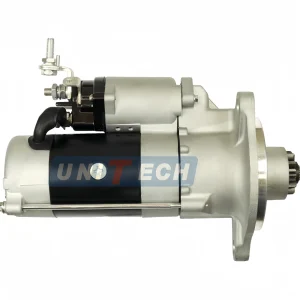
Torque is an essential value. It provides insight into engine crankshaft rotation and operation. If the starter motor can’t produce enough torque, it may fail to start the engine.
Why Torque is So Important
Heavy-duty diesel trucks operate under different conditions. Winter can bring freezing temperatures and make starting difficult. Sufficient torque can help the engine start and run smoothly.
Low starting torque can cause:
- Slow engine cranking
- Repeated starting attempts
- Excessive battery discharge
- Starter motor overheating
- Increased wear on internal components
How to Select the Right Torque
Check the starter motor torque. Match it with the heavy-duty truck requirements. Consider factors:
- Rated torque output
- Peak torque capability
- Gear reduction ratio
- Engine compression requirements
- Cold-starting conditions
Tip #3: Select the Correct Starter Motor Power
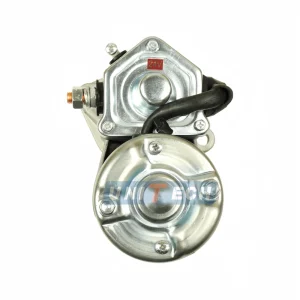
Correct motor power is critical. It is often measured in kilowatts (kW). Since you are operating heavy-duty diesel trucks, they require high power.
For example, Light commercial diesel trucks typically require 2.0–3.5 kW. Medium-duty diesel trucks may require 3.5–5.5 kW. Similarly, heavy-duty diesel trucks require 5.5–7.5 kW.
However, don’t choose based solely on power. You must check other factors, such as torque, reliability, pricing, and more.
Tip #4: Verify the Number of Gear Teeth
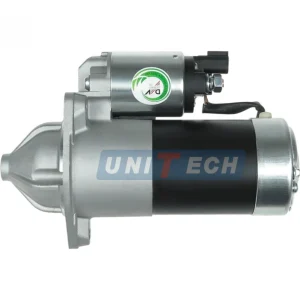
The pinion gear is a small yet powerful component of the starter engine. It has a different number of teeth, dimensions, and other factors.
The pinion gear engages with the flywheel and helps start the engine. It must have the correct number of gear teeth to avoid issues or noise. Confirm and check the number of gear teeth.
An incorrect number of gear teeth can cause issues.
- Poor engagement with the flywheel
- Grinding noise during startup
- Excessive gear wear
- Damage to flywheel teeth
- Failure to start the engine
Choose and verify the number of teeth before selecting the starter motor.
Tip #5: Choose the Correct Operating Voltage
Operating voltage is essential for the proper operation of starter motors. Most diesel trucks operate at 12V or 24V. Many commercial trucks often operate at 24V.
Tip #6: Check Installation Dimensions and Mounting Compatibility
Installation of the components requires the proper dimensions. When installing a starter motor, you must match its specs to the truck’s required systems.
Heavy-duty trucks use engine blocks, bell housings, mounting plates, and starter configurations. Physical compatibility is crucial.
Important Installation Measurements
| Dimension | Why It Matters |
| Mounting flange | Ensures correct attachment to the engine |
| Bolt-hole spacing | Matches the original mounting points |
| Nose housing length | Provides correct positioning |
| Overall starter length | Ensures sufficient installation clearance |
| Pinion projection | Allows proper flywheel engagement |
| Mounting orientation | Prevents installation conflicts |
| Terminal position | Provides correct electrical connections |
Tip #7: Consider Starter Motor Construction and Durability
Starter motor construction defines the durability and integrity. When considering a starter motor, make sure it’s built to last. Don’t focus only on material durability; also consider compatibility.
The key factors that ensure durability are:
- High-Quality Copper Windings
- Durable Armature
- Heavy-Duty Solenoid
- Strong Pinion Gear
- Quality Bearings and Bushings
Tip #8: Consider Working Environment
Heavy-duty trucks work in different conditions. Choose starter motor features based on the environmental conditions.
Cold Weather Applications
Low temperatures increase engine oil viscosity and may affect engine performance. For cold weather, you should consider:
- Adequate starting torque
- Correct motor power
- Reliable solenoid operation
- Suitable battery capacity
- Compatibility with the manufacturer’s cold-start requirements
Construction and Mining Applications
Construction and mining operations create harsh conditions for heavy-duty trucks. Only a reliable starter motor can deliver consistent performance. For durability, you must consider:
- Strong housing construction
- Reliable internal insulation
- Durable electrical connections
- Resistance to vibration
- Protection against environmental contamination
Long-Haul Trucking
If you travel long distances daily, you’ll experience frequent starts and stops. To handle these conditions, choose starter motors with reliable performance and efficiency.
Tip #9: Consider OEM Parts Availability
For auto parts, spare parts must be available. You must check the OEM parts availability.
Understand whether the specific OEM part numbers are available. Moreover, consider cross-reference compatibility, and purchase only heavy-duty diesel truck start motors with available spare parts.
Tip #10: Compare Suppliers
The final step is to select the correct supplier. You must go through a variety of suppliers. Compare quality, warranty, and supplier capabilities. Select the ones that offer better performance.
Conclusion
Choosing a starter motor for a heavy-duty diesel truck isn’t about the price or size. Instead, you should consider starting torque, motor power, gear teeth, operating voltage, mounting dimensions, and operating conditions. Match the specs to your needs. Select the best and compatible motor.
If you are looking for high-quality starter motors, UNITECH Motor is a top name. Our R&D team innovates and provides quality solutions. Explore our wide range of starter motor solutions today!