
Introduction
Your alternator powers your car whenever you’re driving. It powers lights, fuel pumps, engine sensors, climate, and car electronics.
According to AAA, charging system failure is among the top causes of car breakdowns. Alternators can also fail early due to overheating or a weak battery. By keeping it in care, you can extend its life.
A few habits can help you save money and reduce maintenance costs. This article shows that regular inspections can help prevent costly repairs.
Alternator Components

Any component of an alternator never rests. The engine rotates the rotor, and this produces a magnetic field. The stator surrounds the rotor, which converts the magnetic field into an electric current.
A rectifier transforms alternating current into direct current. The voltage regulator maintains a constant output to protect electronics.
Bearings support rotation, which produces heat and friction. The engine transfers power to the pulley and the belt. If any components wear out, it will lead to earlier alternator failure.
Regular Inspections
By checking the alternator monthly, you can easily identify issues earlier. Regular inspections can help save you money and make your road trip easier.
Avoid Electrical Overload
Excessive electrical loads can heat the alternator, shortening its lifespan. The heavier the electrical load, the harder the alternator has to work every time you drive. With a few steps, you can lower the load:
- Turn off the heated seats and the rear defrosters when not in use.
- Switching off phone chargers and other accessories.
- Limit the use of the sound systems.
- Use LED bulbs for both external and indoor lighting.
Compared to halogen bulbs, LED bulbs are much more energy-efficient. Reduced loading reduces heat in the rectifier diode windings. Lower heat helps preserve the insulation and maintain performance.
Prevent Overheating
Heat is the primary cause of alternator failure. Heat destroys electronics and insulation. Make sure that the engine bay is well ventilated and handle any oil spills or coolant leakages.
Bearings and electric components are destroyed by water in the alternator. One should not wash it with water or brake fluid. Instead, use an electrical contact cleaner to clean it. A clean environment is free from air pollutants and maintains low temperatures.
Regularly inspect the belts
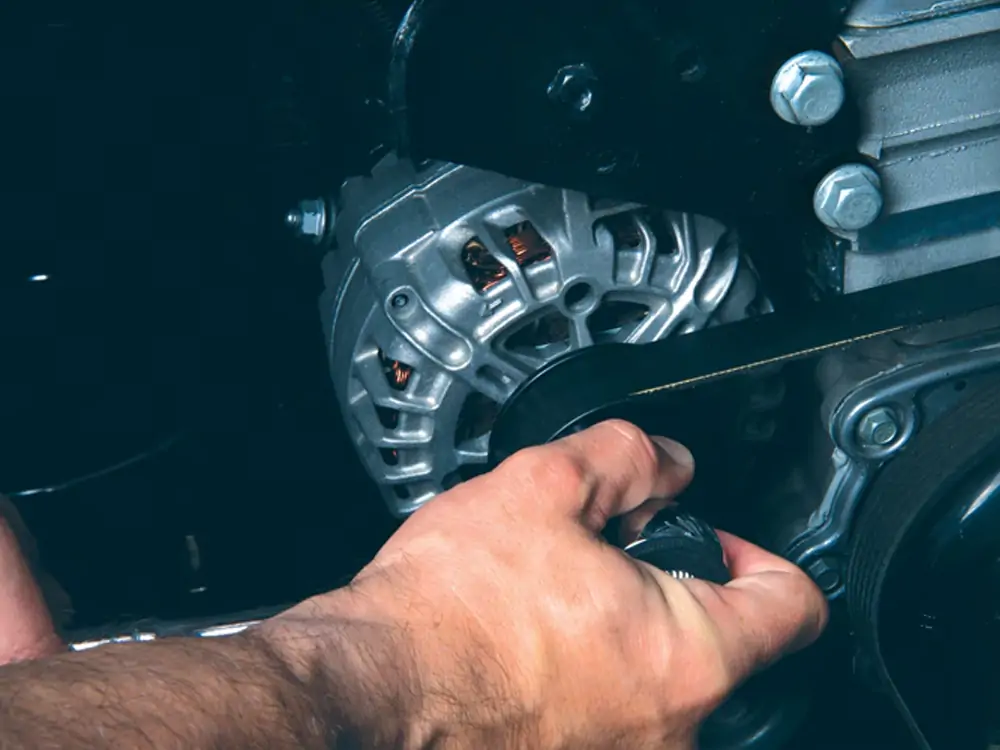
The alternator depends on the engine-driven belt. A loose belt will result in low charging efficiency and a rise in the alternator’s temperature. Inspect the belt each time an oil change is done. Look at it in the form of cracks, glaze, and ragged edges.
There should always be good tension to prevent slipping and reduce noise. A tight belt strains the bearings and shortens the alternator’s life.
Drive smoothly
The alternator load is dependent on the driving style. When acceleration is high, the engine speed increases and the electric demand rises. Repeated aggressive driving puts extra strain on the rotating components.
Stress is reduced by constant and steady acceleration and speed. Normal driving also improves fuel efficiency and reduces wear on engine accessories.
Check the battery
Battery health largely affects the alternator’s lifespan. A low-quality battery consumes more current during charging. With large currents and windings, rectifiers can overheat. The voltage of test batteries is to be checked twice a year.
When the engine is not running, the battery voltage is 12.6 volts. Replace old batteries early. It is not good to drive with a dull battery. The battery is also subjected to extreme recharging because of frequent jump-starts. Battery neglect is the leading cause of premature alternator failure, according to some mechanics.
Conclusion
Proper service, battery status, and load-handling state determine the alternator’s life. The issues are detected at the initial level through frequent checks.
Reduced electrical loading means reduced heat loading. Maintaining correct belt tension is key to optimal power transfer. By driving carefully, mechanical damages are avoided. Good batteries help protect internal components.
These practices improve the alternator and make the vehicle more reliable.